


Rebuilding Demand: Notes from a Room Full of People Trying to Sell Wine
By John Szabo MS
No one at the “Rebuilding Demand” panel in Manhattan last week pretended things were fine. Moderator Elaine Chukan Brown, author, writer and speaker, started with what everyone already knew: “Global market in wine has been declining. Climate change means there’s a lot of uncertainty. Vines are literally being pulled out all over the world.” Even Bordeaux is allowing new grape varieties and introducing new styles, as she discovered at a Bordeaux event recently held in London. “What?” she exclaimed, “the most iconic region in the world? Bordeaux doesn’t pivot!” It is pivoting now.
The session was part of a California wine trade program called Eureka. It brought together about 120 sommeliers, buyers and writers from Canada, Mexico, the Dominican Republic, Costa Rica and New York. The question was practical: what gets people in the door, and what gets them to order wine once they’re seated?

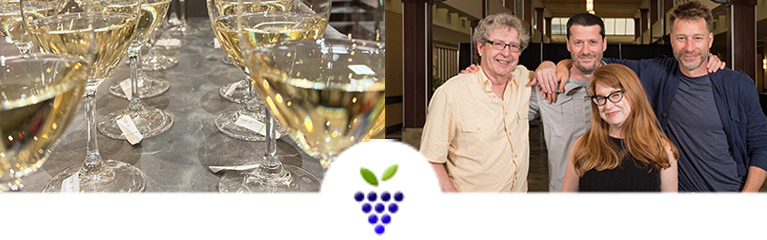
Speakers at the “Rebuilding Demand” discussion in NYC – left to right: Vincent Morrow MS, Elain Chukan Brown, Wanda Mann
By the glass, and by the experience
Wanda Mann is East Coast editor of The SOMM Journal and The Tasting Panel, and New York ambassador for Star Wine List. She has watched by-the-glass lists change completely. “Gone are the days [of] two reds, two whites, maybe a rosé, one really bad sparkling.” Coravin has made $50 and $80 pours possible. Younger drinkers, she said, “like to hopscotch around the list… they don’t want to be beholden to one bottle the whole night. So, I think it invites exploration. It encourages people to come back.”
Vincent Morrow MS, group wine director for Union Square Hospitality Group, sees the same thing at the tasting-menu end. USHG has about $40 million a year in wine revenue across its New York restaurants. When Morrow worked in Napa, wine-pairing uptake went from single digits in 2022–23 to “almost a third of every guest walking through the door.” His explanation: “When dollars are stretched and things are more expensive, you want your money to go further.” Guests are paying for the whole experience, not just a bottle.
Mann described restaurants that offer pairings in tiers (entry, mid and premier), where each guest picks their own level. Chukan Brown pointed out the benefit nobody says out loud: it removes the awkward talk about money at the table. “They can see for themselves… I can afford pairings at this level. They don’t need to address it with you.”
Intimidation, and the trust that fixes it
Intimidation came up again and again. The answer the panel kept giving was trust, not more knowledge. Morrow’s minimum expectation for USHG servers is that they should be able to sell any wine that’s on by the glass. “That shouldn’t be scary,” he said. “And you’d be surprised how many times you run into that going out to dine.”
But being a good server is about much more than bookish wine knowledge, In fact, under Morrow, the group’s sommelier trainings are, in his words, “90% … not knowledge-based. It’s mostly about social cues and how to read a table.” On the contrary, knowledge can be a dangerous, as anyone who’s been forced to sit through a sommelier’s unwanted tableside lecture can tell you. Morrow recounted one of his first day’s training at Gary Danko in San Francisco. He spent 15 minutes selling one table a bottle of Bartolo Mascarello Barolo while the senior sommelier overseeing his training closed wine sales at three other tables. The lesson stayed with him: distill it “not just to the most important things, but the most important things to those people at that table.” Sage advice.
Last summer USHG ran an eight-week wine course for 40 servers, managers and bartenders, and paid most of the tuition back to those who finished it. Demand for next year’s course already exceeds the room’s capacity. “There’s a hunger for it,” Morrow said, “but there’s this gap in terms of feeling safe asking the questions.”
Mann suggests that sommeliers should get on social media: “When they see you online, they feel like they know you. They feel like they already have a personal connection with you.” Breaking down the intimidation is critical. Mann mentioned reports of diners asking AI what to order before going out “because they’re afraid to talk to the somm, which is crazy.”
Anne Martin, who runs the beverage program at Maple Leaf Sports & Entertainment in Toronto, described the Canadian situation. Her program was known for its California list, and access to new California wine has been cut off. Guests don’t easily switch to other regions, and some have moved to cocktails or ready-to-drink cans. Chukan Brown asked the harder question: once people get used to drinking something else, how do you bring them back?
Morrow argued that non-alcoholic drinks are not the threat they’re made out to be. “Much rather someone be happy with an $8 great non-alcoholic beer or a $14 fantastic non-alcoholic wine versus just settling for Coke.” A guest who has one glass at lunch and an NA drink after it has not left wine.
The media question
Toward the end I asked the panel whether wine media still matters. Has it degenerated into top-10 lists and clickbait? Could it serve the trade better?
Mann agreed with the premise. “We’re definitely living in an age of the listicle.” She hasn’t had an assignment over 2,000 words in four years, and there are fewer outlets. She also said, “A lot of the wine media [is] writing for other wine media as opposed to writing for consumers.” Morrow said his staff aren’t coming in excited about an article on Italian Malvasia. They’re asking how red wine is made. Chukan Brown then asked the room whether anyone had customers come in for a specific wine because an article had excited them. Nobody in the room raised a hand.
It was an uncomfortable moment, and a useful one. Chukan Brown’s conclusion was the right one: “Media is not just writing. Media is also photography… video… podcasts.” Wine media’s problem is less about relevance than about who we’re talking to, and where and how we talk to them.
At WineAlign, we try to write for people who drink wine, not for other critics or wine producers, and to tie recommendations to bottles readers can actually buy. Every point the panel made applies to us too: lower the barrier, build trust, and give people what’s most important to them. The trade is learning to sell wine without gatekeeping, and wine media is learning to write about it the same way. The good news is that the interest Morrow sees in his staff is out there among drinkers too. Our job is to answer the questions they are actually asking.